UL 2218 is a deliberately brutal test. A two-inch steel ball is dropped onto the shingle from twenty feet, twice on the same spot, and the mat is then examined for any crack or tear through to the back. A shingle that survives at the highest level is rated Class 4. That is the rating you want on a roof in Olathe.
Why it matters more here than almost anywhere
Radar has detected 193 hail days over this city since 2014. In 2026 alone: 2¾-inch stones on March 11 and August 6, 2½-inch on April 27 and September 6, plus fourteen smaller events. The record over Olathe is 3½ inches, on June 27, 2016. A standard architectural shingle is generally finished by a two-inch stone. A Class 4 shingle routinely takes the same hit and keeps its mat intact — which is the difference between a claim with a deductible and no claim at all.
The insurance discount
Essentially every carrier writing homeowners policies in Kansas offers a premium credit for an impact-resistant roof, because it saves them the claim. The credit applies to the wind-and-hail portion of your premium and commonly runs between about 10 and 30 percent of that portion depending on the company and the shingle. In a county where carriers pay hail claims year after year, those credits are among the most generous in the country.
Getting it is administrative: the manufacturer issues a certificate identifying the product and its UL 2218 Class 4 rating, we hand it to you at completion, and you send it to your agent. Ask your carrier what they allow before you choose the shingle — the answer sometimes changes which product makes sense.
How we install it
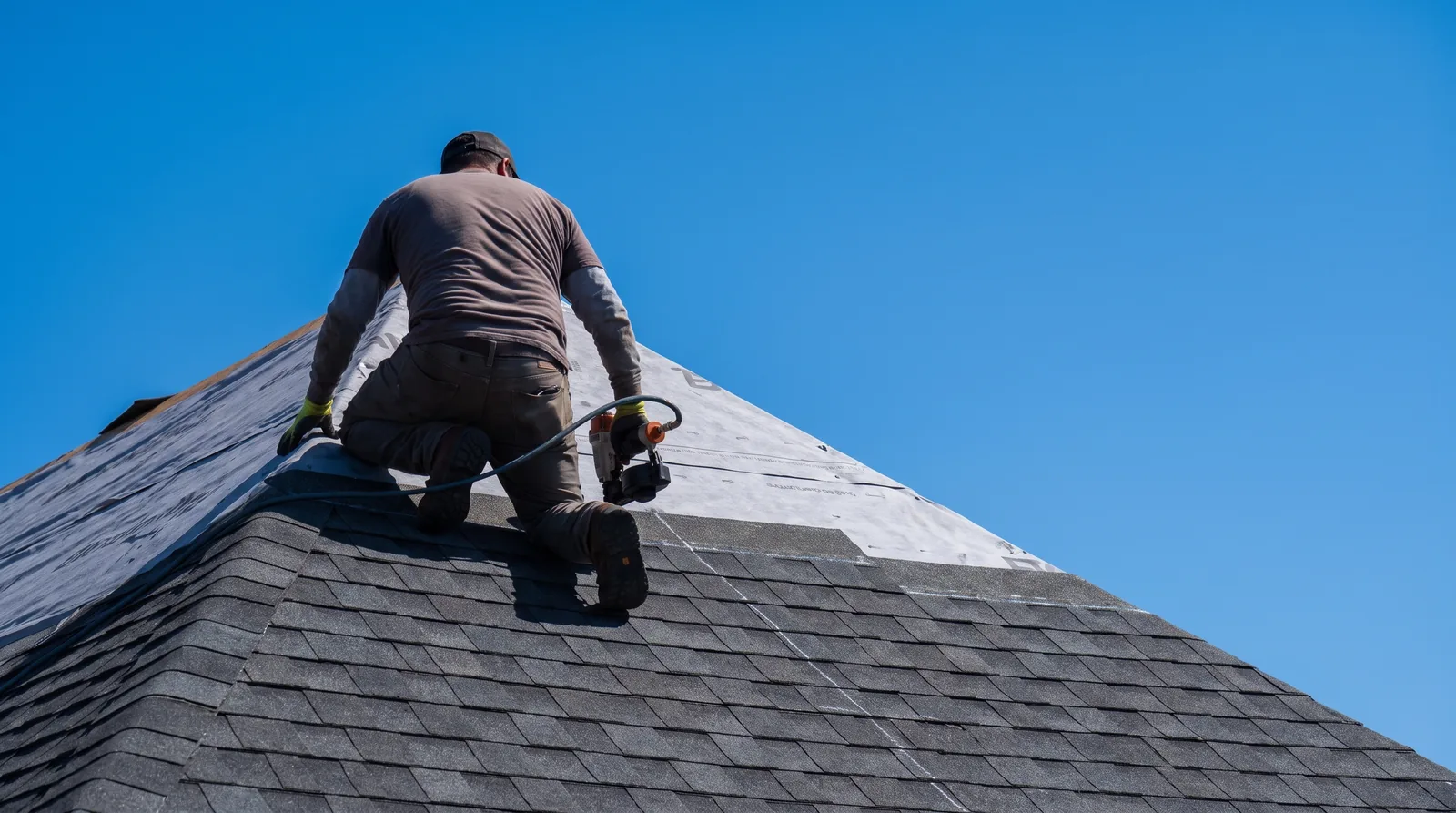
Six nails per shingle rather than four, in the manufacturer's nailing zone, which is what the high-wind and impact warranties require. Starter strip at eaves and rakes. Ice barrier at the eaves to the 2018 IRC requirement. Matching Class 4 hip and ridge caps — fitting standard caps to a Class 4 field is a common way to quietly break the rating, and some carriers will ask. Full synthetic underlayment, new flashing throughout, and the certificate in your hand at the end.
Questions we get about this
Is Class 4 actually worth it in Olathe?
In this city, more than almost anywhere in the country. 193 radar-detected hail days since 2014 means the question is not whether hail hits your roof but how often. The upgrade runs roughly $2,500-$4,500 on a typical home; against that you have an annual premium credit on the wind-and-hail portion, a roof that survives the storms that total standard shingles, and the deductibles you do not end up paying. We will price both options side by side so you can see the real gap.
Does a Class 4 roof mean hail can't damage it?
No, and be suspicious of anyone who says so. Class 4 means the shingle passed a specific impact test without its mat cracking. Very large or wind-driven hail can still damage one, and the metal on your roof - vents, valleys, gutters, flashing - dents at sizes that leave the shingle untouched. What Class 4 buys you is a much higher threshold before the roof covering itself fails.
Will my insurer definitely give me the discount?
Nearly all Kansas carriers offer one, but the size varies a lot and a few tie it to specific products or require their own inspection. Call your agent before you pick the shingle, ask what credit they give and what documentation they need, and we will make sure the certificate matches. It is a five-minute call that occasionally changes the recommendation.
Do the ridge caps have to be Class 4 too?
They should be, and we install them that way. Hip and ridge caps sit at the most exposed part of the roof and take the most direct impacts. Finishing a Class 4 field with standard caps leaves the vulnerable line unprotected, and some carriers check the caps specifically before granting the credit.