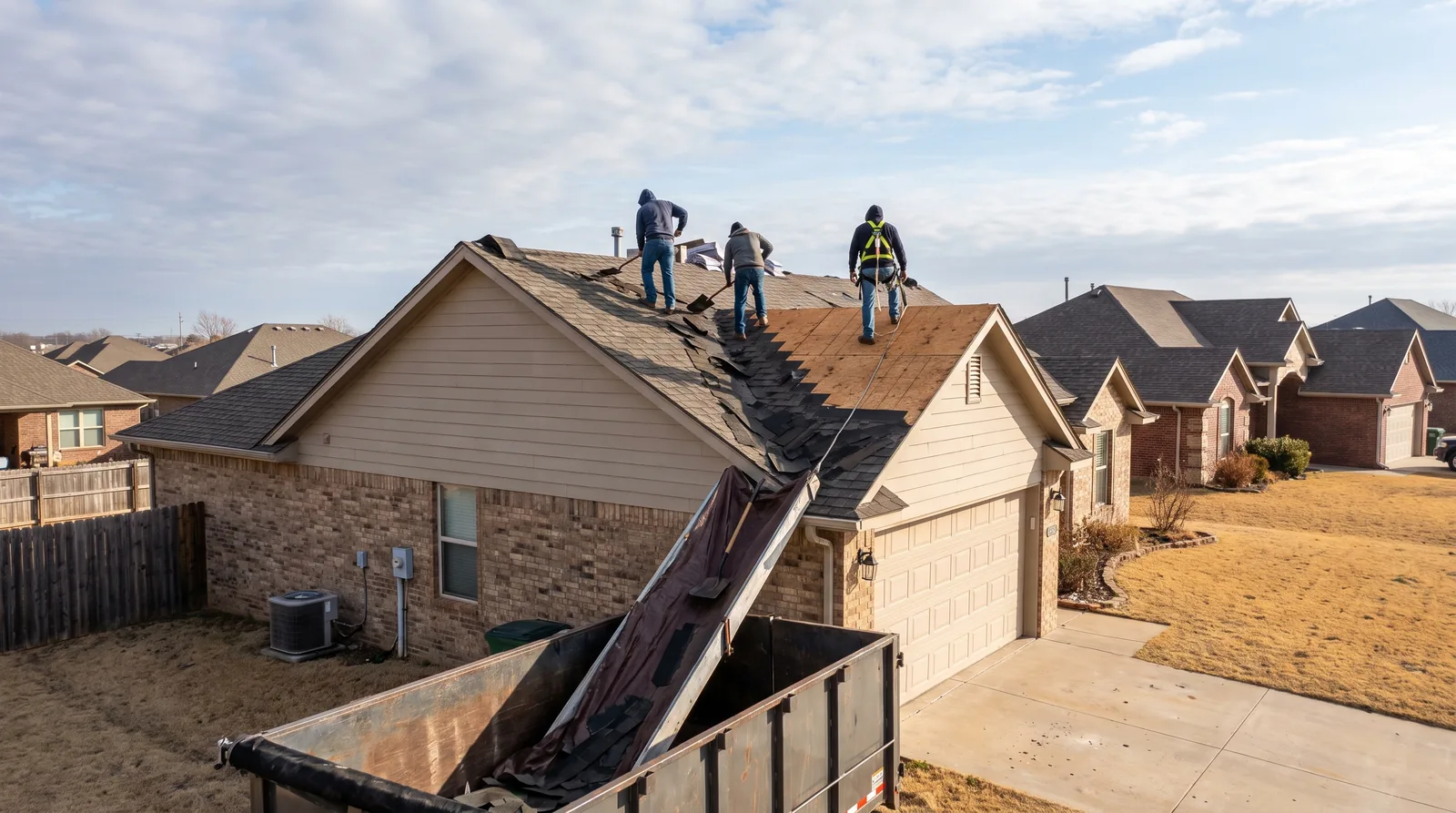
Hail gets the attention in Kansas, but wind does a quieter and in some ways nastier kind of damage. Asphalt shingles hold themselves down with a strip of factory adhesive that bonds in the sun. A strong gust lifts the tab, the bond tears, and unless you are standing on the roof you will never know — the shingle lies back down and looks exactly like its neighbours. Now it is a loose flap waiting for the next storm, and when that one comes the whole course goes.
What we look for
- Creasing. A horizontal fold line across the tab where it bent backwards. The mat is fractured along that line even though nothing is missing, and it will crack there.
- Broken seal strips. We lift tabs by hand across each slope. A properly sealed shingle resists; an unsealed one comes up with no effort at all.
- Missing shingles and ridge caps. Ridge caps are the most exposed part of the roof and the first thing to leave.
- Lifted or peeled drip edge and flashing. Wind gets under an edge and works it loose all season.
- Debris strikes. Branch impacts puncture, and in Johnson County a windstorm and a hailstorm are usually the same storm — so we check for both.
Kansas wind, specifically
Thunderstorm outflow across the metro regularly runs 60 to 80 mph, and the derecho-type events that come through every few years push well past that. Straight-line wind is the common case, but Johnson County also sits in a genuine tornado corridor, and the March 2026 outbreak that produced the month's largest hail came with the same system. A roof that survived the gust intact can still have half its seal strips broken.
Repair or claim
A handful of missing shingles is a repair — usually $350 to $900. Creasing and broken seals across whole slopes is a different matter: that is a functional failure of the roof covering and it is generally a covered loss. The distinction matters, so we document it the same way we document hail: photographs, slope by slope, dated to the storm. If it is claimable we will meet the adjuster; if it is a repair we will just fix it.
If shingles are off right now and rain is coming, call — tarping is available any hour and the cost comes off the repair.
Questions we get about this
Shingles blew off but the rest looks fine. Is that a claim?
Often, yes, and more often than homeowners assume. Carriers look at whether the wind event caused a functional failure of the roof covering — and creased, unsealed shingles across a slope count even where nothing is visibly missing. The mistake is to look at four bare spots, call it a small repair, and never have the other slopes checked. We check all of them and photograph what we find before anyone decides.
How fast does a lifted shingle actually leak?
Sometimes immediately, usually not. Underlayment buys you time — that is what it is for. The failure normally arrives in the next wind event, when the unsealed course peels back properly and takes the ones above it. That delay is why wind damage so often gets discovered as a leak months after the storm that caused it, by which point tying it to the storm is much harder.
Can you match my shingles for a wind repair?
Usually close, occasionally exactly. If your roof is a current product line and less than about eight years old we can often get a genuine match. Older than that, sun fade means new shingles will read slightly lighter. We will show you the comparison before installing anything, and where appearance matters we will price doing the full slope.